


HPLC-GPC-Detectors
S 4245/ S 4250 – the UV/VIS Detectors for routine analyzes in HPLC
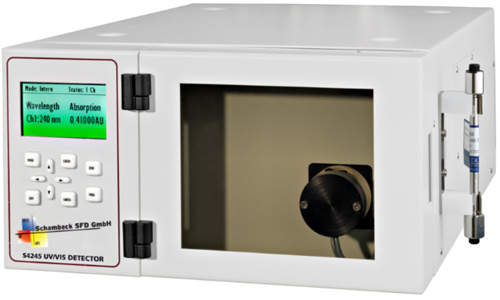
The UV/Vis - Detektors S 4245 und S 4250 are variable wavelength UV/Vis detectors for routine analysis and sophisticated research. The dual lamp design offers a wavelength range of 190 – 900 nm with a low baseline noise. The front - accessible flow cell can easily be exchanged, as can be the lamps which are accessible through a side panel in the instrument housing.
Integrated Wavelength Program
The UV/Vis - Detektoren S 4245 und S 4250 features a wavelength program to change the selected wavelength over time. With this feature the optimum wavelength can be selected for each analyzed substance according to its retention time.
Integrated Peak Detector
The integrated Peak Detector works as a basic fraction collector. The peak detection level can be freely programmed for peak start and peak end to enhance the collection purity. An integrated 24V output for switching a solenoid valve is used for the fraction collection, which is automatically operated with a selectable time delay.
Optional - Dual - Wavelength
The UV/Vis - Detektors S 4245 und S 4250 are available with an optional second wavelength. This feature enhances the Wavelength Program feature that you can measure 2 different wavelengths at the same time. A second D/A converter output comes with this option to keep the system flexible to be used with any data acquisition software available.
Optional - ONLINE - SCAN
Another option for the UV/Vis - Detectors S 4245 und S 4250 is the Online Scan. With the Online Scan whole spectrum information can be gathered at a certain time. This scan information is stored internally and can be accessed at any time. The Online Scan is a good alternative to a full UV PDA detector.
technical specifications
The UV/Vis - Detektoren S 4245 und S 4250 features a wavelength program to change the selected wavelength over time. With this feature the optimum wavelength can be selected for each analyzed substance according to its retention time.
Integrated Peak Detector
The integrated Peak Detector works as a basic fraction collector. The peak detection level can be freely programmed for peak start and peak end to enhance the collection purity. An integrated 24V output for switching a solenoid valve is used for the fraction collection, which is automatically operated with a selectable time delay.
Optional - Dual - Wavelength
The UV/Vis - Detektors S 4245 und S 4250 are available with an optional second wavelength. This feature enhances the Wavelength Program feature that you can measure 2 different wavelengths at the same time. A second D/A converter output comes with this option to keep the system flexible to be used with any data acquisition software available.
Optional - ONLINE - SCAN
Another option for the UV/Vis - Detectors S 4245 und S 4250 is the Online Scan. With the Online Scan whole spectrum information can be gathered at a certain time. This scan information is stored internally and can be accessed at any time. The Online Scan is a good alternative to a full UV PDA detector.
technical specifications
| Order Information UV/ VIS Detector | |
|---|---|
| Part-no. | Description |
| UV/Vis 4245 | UV/Vis Detector S 4245, 1 Channel |
| UV/Vis 4245-2 | UV/Vis Detector S 4245, 2 Channels |
| UV/Vis 4245-2S | UV/Vis Detector S 4245, 2 Channels with SCAN Option |
| UV/Vis 4250 | UV/Vis Detector S 4250, 1 Channel |
| UV/Vis 4250-2 | UV/Vis Detector S 4250, 2 Channel |
| UV/Vis 4250-2S | UV/Vis Detector S 4250, 2 Channels with SCAN Option |
| UV/VIS—1032009 | S 4245/ S 4250 Flow cell, analytical, stainless Steel |
| UV/VIS—1032010 | S 4245/ S 4250 Flow cell, analytical, PEEK |
| UV/VIS—1032011 | S 4245/ S 4250 Flow cell, micro, stainless Steel |
| UV/VIS—1032012 | S 4245/ S 4250 Flow cell, micro, PEEK |
| UV/VIS—1032013 | S 4245/ S 4250 Flow cell, semi-preparative, stainless Steel |
| UV/VIS—1032014 | S 4250/ S 4250 Flow cell, semi-preparative, stainless Steel |
| Order Information Spare Parts UV/ VIS | |
|---|---|
| Part-no. | Description |
| 47– 4010001 | Tungsten Lamp for S 4245 / S 4250, preadjusted |
| 47– 4010002 | Deuterium Lamp for S 4245 / S 4250, preadjusted |
S 4345/ S 4350 PDA (DAD) HPLC Detektor
The S 4345 and S 4350 PDA - Detector are photodiode array (PDA) detectors for routine analysis and sophisticated research.
The dual lamp design offers a wavelength range of 190 – 720 nm ( with 256 Diodes) or from 190 - 1015nm (with 1024 diodes) with a low baseline noise.
The front accessible flow cell can easily be exchanged, as can be the lamps which are accessible through a side panel in the instrument housing.
The front accessible flow cell can easily be exchanged, as can be the lamps which are accessible through a side panel in the instrument housing.
4-Channel UV/Vis - Detector
The S 4345 / S 4350 PDA - Detector features 4-Wavelength channels to measure chromatograms at 4 different wavelengths at the same time. With this feature the optimum wavelength can be selected for each analysed substance.
Integrated Peak Detector
The integrated Peak Detector works as a basic fraction collector. The peak detection level can be freely programmed for peak start and peak end to enhance the collection purity. An integrated 24V output for switching a solenoid valve is used for the fraction collection, which is automatically operated with a selectable time delay.
Optional - Analog Output
The S 4345 / S 4350 PDA - Detector are available with an optional 4-Channel Analog output. This D/A converter output option is offered to keep the system flexible to be used with any data acquisition software available.
technical specifications
The S 4345 / S 4350 PDA - Detector features 4-Wavelength channels to measure chromatograms at 4 different wavelengths at the same time. With this feature the optimum wavelength can be selected for each analysed substance.
Integrated Peak Detector
The integrated Peak Detector works as a basic fraction collector. The peak detection level can be freely programmed for peak start and peak end to enhance the collection purity. An integrated 24V output for switching a solenoid valve is used for the fraction collection, which is automatically operated with a selectable time delay.
Optional - Analog Output
The S 4345 / S 4350 PDA - Detector are available with an optional 4-Channel Analog output. This D/A converter output option is offered to keep the system flexible to be used with any data acquisition software available.
technical specifications
| Order Information PDA Detector | |
|---|---|
| Part-no. | Description |
| 55-S000162 | S 4350 PDA - Detector - 256 Diodes |
| 55-S000163 | S 4350 PDA - Detector - 1024 Diodes |
| 55-S000164 | S 4345 PDA - Detector - 256 Diodes |
| 55-S000165 | S 4345 PDA - Detector - 1024 Diodes |
| 55-S000169 | S 4345/ S 4350 Flow cell, analytical, stainless stell |
| 55-S000517 | S 4345/ S 4350 Flow cell, analytical, peek |
| Order Information Spare Parts PDA | |
|---|---|
| Part-no. | Description |
| 55-S000279 | Tungsten Lamp for S 4345 / S 4350, preadjusted |
| 55-S000280 | Deuterium Lamp for S 4345 / S 4350, preadjusted |
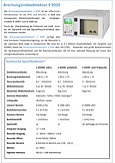
S 2020 Differential Refractive Index Detector for HPLC, GPC/SEC
The Refractive Index Detector S 2020 series provides a
consistent enhancement of the already successfully established RID models RI2000 and RI2000-F. The RID S 2020 series offers users 3 times higher sensitivity, (compared to RI2000) stability and reproducibility required for optimal RI detection in HPLC / GPC. By consistently revising the electronic components, it has been possible to significantly improve drift and noise.

The optical system is now better insulated against temperature changes and with programmable temperature settings, ensures a stable baseline and an optimal signal/noise–ratio.
The auto zero, purge, polarity, temperature and the frequency for data output are externally controllable by USB or RS232 Port. RID system status - information such as temperature and total voltage can be externally retrieved by RS232 or USB.
The Refractive Index Detector S 2020 offers communication interface to acquire data directly with Clarity Chromatography Software without using any external signal interface. The Refractive Index Detector S 2020 includes - micro, - analytical and - semi preparative refractive index detectors.
technical specifications
The auto zero, purge, polarity, temperature and the frequency for data output are externally controllable by USB or RS232 Port. RID system status - information such as temperature and total voltage can be externally retrieved by RS232 or USB.
The Refractive Index Detector S 2020 offers communication interface to acquire data directly with Clarity Chromatography Software without using any external signal interface. The Refractive Index Detector S 2020 includes - micro, - analytical and - semi preparative refractive index detectors.
technical specifications
| Order Information S 2020 | |
|---|---|
| Part-no. | Description |
| S 2020 A | Differential Refractive Index Detector, Analytical |
| S 2020 M | Differential Refractive Index Detector, Micro |
| S 2020 P | Differential Refractive Index Detector, Preparative |
| Order Information Spare Parts | |
|---|---|
| Part-no. | Description |
| S2020-030 | Flow cell, S 2020, micro |
| S2020-001 | Flow cell, S 2020, analytical |
| S2020-031 | Flow cell, S 2020 preparative |
| S2020-012 | Spare lamp S 2020 |
| S2020-024 | Seal kit for flow cell S 2020 |
| S2020-006 | Purge valve S 2020 |
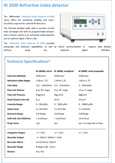
RI 2000 Differential Refractive Index Detector for HPLC, GPC/SEC
The RI 2000 Differential Refractive Index Detector series offers the sensitivity, stability and reproducebility required for optimal RI detection.
The thermal isolated optic with a countercurrent heat exchanger and with its programmable temperature control, results in an extremly stable baseline and an optimal Signal / Noise ratio.
The thermal isolated optic with a countercurrent heat exchanger and with its programmable temperature control, results in an extremly stable baseline and an optimal Signal / Noise ratio.
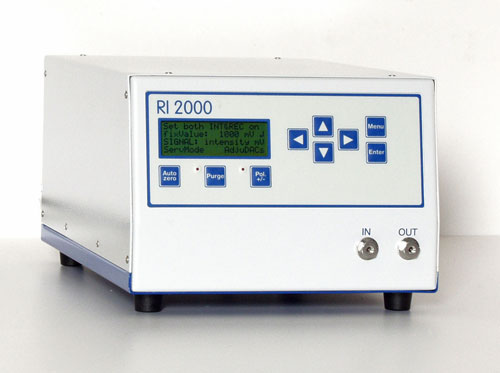
The RI 2000 series provide autopurge and autozero capabilities, as well
as RS232 communication to acquire data directly without using any
external signal interface.
RI 2000 detectors are available for:
RI 2000 detectors are available for:
- micro
- analytical
- semipreparative mode
| Order Information | |
|---|---|
| Part-no. | Description |
| RI 2000 A | Differential Refractive Index Detector, Analytical |
| RI 2000 M | Differential Refractive Index Detector, Micro |
| RI 2000 P | Differential Refractive Index Detector, Preparative |
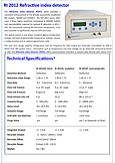
RI 2012 Differential Refractive Index Detector for HPLC, GPC/SEC
The new Refractive Index Detector RI 2012 series provides a consistent enhancement of the already successfully established Refractive Index Detector models RI 2000 and RI 2000-F.
The Refractive Index Detector RI 2012 series offers users 3 times higher sensitivity, (compared to RI 2000) stability and reproducibility required for optimal refractive index detection in HPLC and GPC/SEC
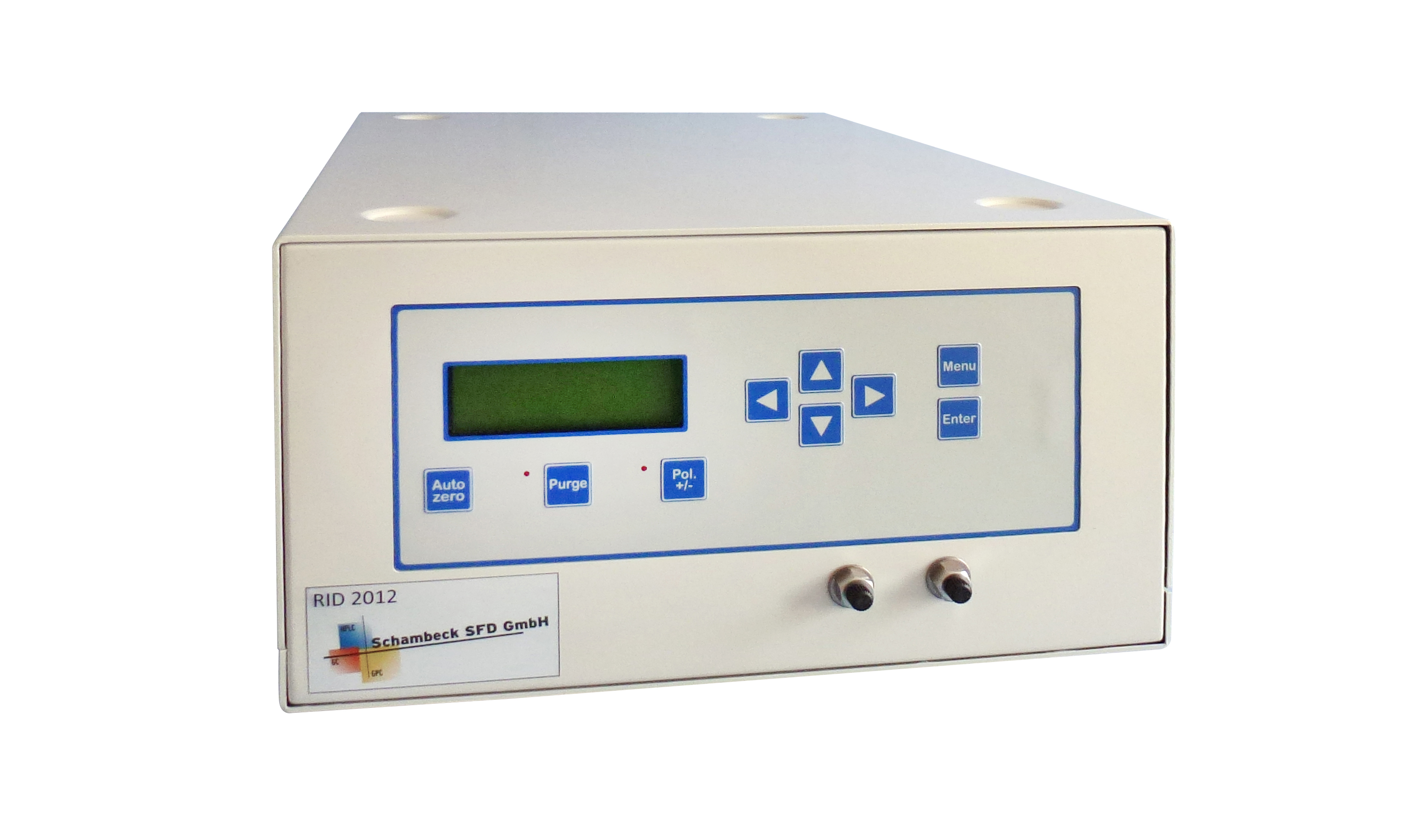
The new Refractive Index Detector RI 2012 series provide autopurge and autozero capabilities, as well as RS232 and USB communication to acquire data directly without using any external signal interface.
Refractive Index Detector RI 2012 detectors are available for:
Refractive Index Detector RI 2012 detectors are available for:
- micro
- analytical
- semipreparative mode
| Order Information | |
|---|---|
| Part-no. | Description |
| RI 2012 A | Differential Refractive Index Detector, Analytical |
| RI 2012 M | Differential Refractive Index Detector, Micro |
| RI 2012 P | Differential Refractive Index Detector, Preparative |
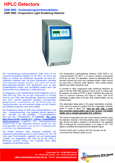
ZAM 3000 - ELSD Detector for routine analysis in HPLC
The Evaporative Lightscattering Detector ZAM 3000 is an universal detector for HPLC. It is used to analyze components which do not have UV absorption, cannot be separated with an isocratic solvent and must use a gradient elution, which cannot be used with a refractive index detector. Only mobile phases without any buffers should be used.
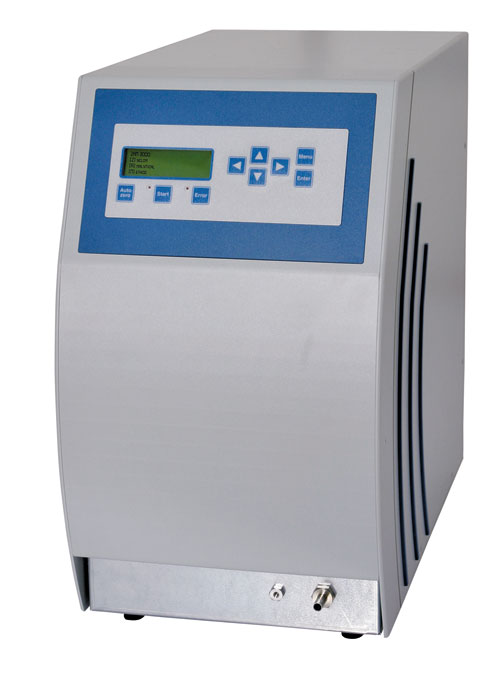
In contrast to other evaporative light scattering detectors all parts of the the ZAM 3000 detectors which come in contact with the sample are made of PTFE or glass. By this this parts are inert to common solvents and easy to clean. One more advantage of glass parts is the fact that contammination can be located easily. The nebulization takes place in the glass nebulization chamber. From here the aerosol is guided into the evaporation chamber which is made of glass, too. The solvent evaporated and only small sample particles reach the detection chamber. Here this particles pass a beam of bright light. By this the light is scatterd in all directions. The scattered light is detected by a photomultiplier in an angel of 120°. The signal is amplified and exported as the detector signal. All parts which get in contact with the sample can be un-mounted and cleaned easily.
technical specifications
technical specifications
ZAM 4000 ELSD Detector for routine analysis in HPLC
The Evaporative Light Scattering Detector ZAM 4000 is an universal detector for HPLC. It is used to analyze components which do not have UV absorption, cannot be separated with an isocratic solvent and must use a gradient elution, which cannot be used with a refractive index detector. Only mobile phases without any buffers should be used.
It differs from the ZAM 3000 evaporative light scattering detector in the gas flow regulation of the additive gas. The ZAM 3000 utilizes a mass flow controller which is replaced by a regulation valve in the ZAM 4000 instruments. As the additive gas flow is not changed in most applications this results in a lower price for the ZAM 4000. In contrast to other evaporative light scattering detectors all parts of the the ZAM 4000 detectors which come in contact with the sample are made of PTFE or glass. By this this parts are inert to common solvents and easy to clean. One more advantage of glass parts is the fact that contammination can be located easily. The nebulization takes place in the glass nebulization chamber. From here the aerosol is guided into the evaporation chamber which is made of glass, too. The solvent evaporated and only small sample particles reach the detection chamber. Here this particles pass a beam of bright light. By this the light is scatterd in all directions. The scattered light is detected by a photomultiplier in an angel of 120°. The signal is amplified and exported as the detector signal. All parts which get in contact with the sample can be un-mounted and cleaned easily.
technical specifications
technical specifications
| Order Information | |
|---|---|
| Part-no. | Description |
| ZAM3000 | ZAM 3000 (with Mass flow controller) |
| ZAM4000 | ZAM 4000 (without Mass flow controller) |
| Order Information Spare Parts | |
|---|---|
| Part-no. | Description |
| ZAM3000-1 | Nebulizer |
| ZAM3000-2 | Nebulizer chamber |
| ZAM3000-3 | drying chamber |
| ZAM3000-4 | Mass flow controller |
| ZAM3000-5 | Main board |
| Additional Informations | |
| ZAM 3000/ ZAM 4000 Applications | |
| ZAM 3000/ ZAM 4000 PowerPoint Demonstration [11,9 MB] |

 schambeck-sfd.com